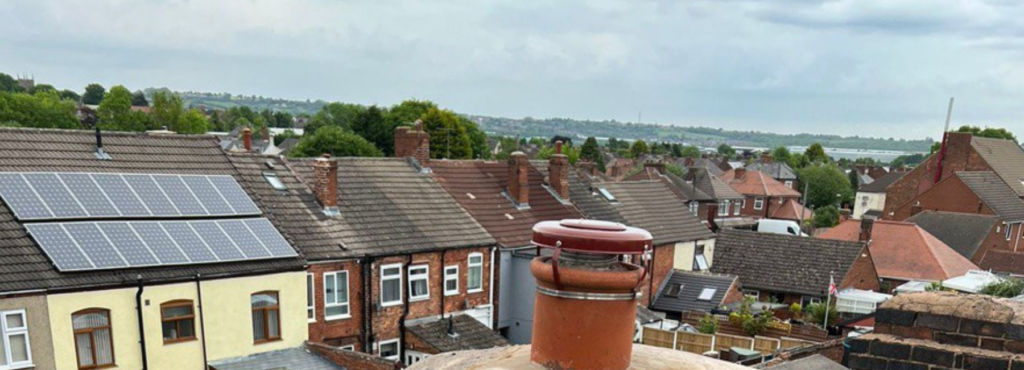
A chimney is one of the most exposed parts of a property. Positioned above the roofline, it faces continual exposure to wind, rain and changing weather conditions. Over time, mortar can deteriorate, flashing can become defective and individual components may begin to loosen. Some problems are immediately noticeable, while others develop gradually and only become apparent when water starts entering around the chimney.
For homeowners in Giltbrook, Nottingham, recognising the early signs of chimney deterioration can help prevent a relatively localised defect from affecting the surrounding roof. At Giltbrook Roofing Repairs, we assess chimney and roofing problems carefully to establish where deterioration has occurred and what repairs are required to restore the area effectively.
Why Does Chimney Condition Matter to the Roof?
A chimney does not function independently from the surrounding roofing system. The point where the chimney meets the roof contains several important details designed to keep the junction weather-resistant.
If the chimney deteriorates, problems can potentially affect:
- Lead flashing
- Roof tiles or slates around the chimney
- Mortar joints
- The chimney stack itself
- Internal areas close to the chimney
- Supporting roofing materials
This is why chimney repairs should consider both the stack and its relationship with the surrounding roof.
1. Crumbling or Missing Mortar Joints
One of the clearest signs that a chimney may need attention is deterioration of the mortar between the bricks.
Mortar joints help bind the masonry together while protecting the edges of individual bricks. Constant weather exposure can gradually cause mortar to crack, crumble or disappear from sections of the chimney.
From ground level, homeowners may notice joints that look noticeably recessed or irregular.
Repointing deteriorated areas can restore the mortar joints before further weather exposure contributes to additional deterioration.
2. Cracked or Damaged Chimney Bricks
The bricks themselves should also be inspected when chimney deterioration is suspected.
Individual bricks may develop cracks, damaged faces or other visible signs of weathering. Once masonry begins deteriorating, moisture can potentially exploit weakened areas and contribute to further damage.
A small number of affected bricks may represent a localised problem, whereas deterioration across larger areas can indicate that a more thorough chimney assessment is needed.
3. Loose Materials Around the Property
Fragments of mortar or masonry found around the property can sometimes provide an early indication that something above roof level is deteriorating.
This is particularly worth investigating if the debris appears following strong winds or prolonged poor weather.
It may originate from the chimney, ridge details or another part of the roof, so professional inspection is useful for establishing the source rather than making assumptions from ground level.
4. Deteriorating Lead Flashing
Lead flashing is particularly important around a chimney because it helps weatherproof the junction between the masonry and roof covering.
If the flashing becomes loose, damaged or incorrectly positioned, rainfall may find a route into the roofing system.
Possible indications of a flashing problem include:
- Visible lifting or displacement
- Gaps around the chimney junction
- Damp appearing internally near the chimney
- Water ingress during heavy rainfall
- Previous repairs beginning to deteriorate
Flashing problems should be investigated alongside the surrounding masonry and roof covering.
5. Damp or Water Staining Near the Chimney
Internal damp around a chimney is one of the most important warning signs to investigate.
Homeowners may notice staining on ceilings, damp patches on walls or moisture within an accessible loft space.
However, the position of the damp does not necessarily identify the exact external defect. Water can enter around one part of the chimney before travelling along roofing materials and becoming visible somewhere else.
Professional diagnosis is therefore important before deciding which area requires repair.
6. A Damaged Chimney Crown or Top
The upper part of a chimney receives considerable weather exposure and forms an important part of the overall structure.
Cracking or deterioration around the top can allow moisture to affect vulnerable materials. Because this section can be difficult to inspect properly from ground level, developing defects may go unnoticed for some time.
Where deterioration is suspected elsewhere on the chimney, the upper sections should also be considered during an inspection.
7. A Leaning or Visibly Uneven Chimney
Any noticeable change in the alignment of a chimney deserves professional attention.
A chimney that appears to be leaning or showing movement should not simply be treated as a cosmetic issue. The cause needs to be established and the condition of the masonry assessed.
Visible cracking, separation or unusual changes around the stack can provide further indications that a closer inspection is required.
8. Vegetation Growing from Mortar Joints
Plant growth from a chimney is a clear indication that joints or gaps have developed where vegetation can establish itself.
Although a small amount of growth might appear harmless from the ground, roots can occupy existing gaps and retain moisture around the masonry.
Removing the visible vegetation alone may therefore not address the underlying deterioration. The condition of the affected mortar and masonry should also be assessed.
9. Problems That Become Noticeable After Bad Weather
Chimney defects can become more obvious following periods of strong wind or heavy rain.
Poor weather may expose weaknesses that were already developing, particularly around mortar joints, flashing and other vulnerable areas.
After severe weather, it can be useful to look from ground level for obvious changes such as displaced materials or fresh debris. If new internal damp also appears, arranging a professional inspection can help determine whether the chimney or surrounding roof has been affected.
10. Recurring Leaks Around the Same Area
A recurring chimney leak deserves more than repeated surface patching.
If moisture returns after previous work, there may be another defect nearby or the original cause may extend beyond the repaired section.
The chimney and surrounding roof should be assessed together, including relevant areas such as:
- Flashing
- Mortar joints
- Masonry
- Nearby roof coverings
- Junctions
- Previous repair areas
This wider approach can help identify why the problem keeps returning.
Why Chimney Problems Can Affect Surrounding Roofing
Water entering around a chimney does not necessarily remain confined to the chimney itself.
Once moisture gets beneath the external weatherproofing, it may travel into surrounding roofing materials. What began as deteriorated mortar or defective flashing can therefore eventually result in damp becoming noticeable elsewhere.
Early chimney repair helps protect the wider roof by dealing with vulnerable areas before repeated weather exposure causes additional deterioration.
Can Chimney Repairs Be Localised?
Yes. Not every chimney showing signs of wear requires extensive rebuilding.
Where deterioration is limited, appropriate repairs may involve addressing individual areas such as damaged mortar, localised masonry defects or flashing.
The important factor is determining how far the deterioration extends.
A professional inspection can distinguish between an isolated defect and several interconnected problems that require a broader repair approach.
Why Repointing Can Be Important
Repointing involves renewing deteriorated mortar joints while retaining serviceable masonry.
When carried out at the appropriate stage, it can help restore the integrity of weathered joints and reduce further deterioration.
Simply applying material over badly degraded mortar is not the same as properly addressing the affected joints. The existing condition needs to be assessed so that repairs are suitable for the masonry.
Do Not Wait for an Internal Leak
A chimney can require repairs before water becomes visible inside the property.
Visible external deterioration such as crumbling mortar, damaged bricks or displaced flashing can provide an earlier opportunity to address the problem.
Waiting until damp appears means the weatherproofing has potentially already been compromised.
Prompt attention can help keep repairs focused on the original defect while surrounding roofing materials remain serviceable.
Why Professional Chimney Assessment Is Valuable
Chimneys can be difficult to assess accurately from ground level. Some defects are clearly visible, but others occur around roof junctions or upper sections that require closer inspection.
Professional roofers can examine how the chimney interacts with the wider roofing system and identify whether deterioration involves masonry, flashing, surrounding roof coverings or several components together.
At Giltbrook Roofing Repairs, we provide professional chimney repairs and roofing services throughout Giltbrook, Nottingham. Our approach focuses on identifying the cause and extent of deterioration before recommending appropriate work, helping ensure repairs address the actual problem rather than only the most visible symptom.
Conclusion
The most common signs that a chimney needs repairing include deteriorating mortar joints, damaged bricks, defective flashing, loose materials and damp appearing around the chimney internally. Vegetation growth, recurring leaks and visible changes to the chimney stack can also indicate that professional assessment is needed.
Because the chimney forms an important junction with the surrounding roof, ignoring deterioration can allow a localised problem to affect a wider area. Early investigation provides an opportunity to identify damaged components and carry out appropriate repairs before continued weather exposure makes matters worse.
For homeowners in Giltbrook, Nottingham, Giltbrook Roofing Repairs can assess deteriorating chimneys and the surrounding roofing system to determine what work is required. If you have noticed damaged mortar, masonry deterioration or signs of water ingress around your chimney, arranging a professional inspection is a sensible first step.
Call us on: 0115 647 1193
Click here to find out more about Giltbrook Roofing Repairs
Click here to complete our contact form and see how we can help with your roofing needs.